.jpg)
A few years ago, I didn't even know "cozy fantasy" existed as a genre.
At the time, I was going through one of the darkest periods of my life. Getting out of bed felt impossible. Making it through the day felt like an Olympic event. I cried more often than I didn't. My anxiety was constant and overwhelming. I felt hopeless, small, and unsure of myself.
Then, someone recommended The Very Secret Society of Irregular Witches by Sangu Mandanna. They described it as "cozy" and said it might provide a bit of a reprieve.
I remember not being particularly drawn to the title. But I had reached a point where I was willing to try anything that might soften the edges of what I was feeling. So I read it.
And something shifted.
As I moved through the story, the gentle magic, the found family, the warmth of a seaside house filled with small human moments, I felt my nervous system calm in a way I hadn't experienced in months. My shoulders loosened. My thoughts slowed. The ache inside me softened.
It startled me. How could a book do this? And more importantly, could it happen again? From that moment on, I was obsessed.
What Is Cozy Fantasy, and Why Does It Feel So Therapeutic?
I explain the genre in more depth in my post What Is Cozy Fantasy? And Why Are So Many of Us Falling in Love with It? But cozy fantasy is a subgenre of fantasy fiction defined not by its plot structure, but by the way it makes you feel. These are books that feel warm. Books where community and kindness matter, where magic is woven into everyday life, where the world, however strange or fantastical, still feels fundamentally welcoming. Books that hold you gently.
At first, I thought my experience was just coincidence. But the more I read and sought to understand the psychology behind the genre, the more I realized there are real reasons why cozy fantasy can feel deeply healing.
1. It Reduces Cognitive Threat
Traditional fantasy often centers around war, violence, high stakes, and existential danger. Cozy fantasy lowers the emotional stakes. The conflicts are personal, relational, small-scale. The world feels safe.
Research in psychology shows that when we engage with narratives that feel predictable and emotionally safe, our stress response decreases. Our brains stop scanning for danger. Instead, we shift into parasympathetic, rest-and-digest mode. Cozy fantasy gives us magic without menace. That matters when your nervous system is already overloaded.
2. Bibliotherapy Is Real
There is actual research on bibliotherapy, the idea that reading can improve mood and reduce anxiety and depressive symptoms. Clinical studies have shown that structured reading programs can reduce mild to moderate depression, and that narrative immersion is associated with improved emotional regulation.
Even outside clinical settings, reading fiction has been shown to increase empathy, reduce stress (one University of Sussex study found reading can reduce stress by up to 68%), and improve mood through narrative transport.
Cozy fantasy adds something unique: emotional reassurance. The stories almost always promise safety, connection, and hope. And when you're struggling, hope is not small.
3. It Offers Control in a Chaotic World
Cozy fantasy worlds tend to be small. A bookshop. A tea house. A seaside cottage. A magical inn. The problems are solvable. The communities are intimate. The endings are kind.
When your real life feels overwhelming and unpredictable, entering a world where things make sense, and where kindness wins, can feel stabilizing.
It's not escapism in the dismissive sense. It's restoration.
Why Is Cozy Fantasy Booming?
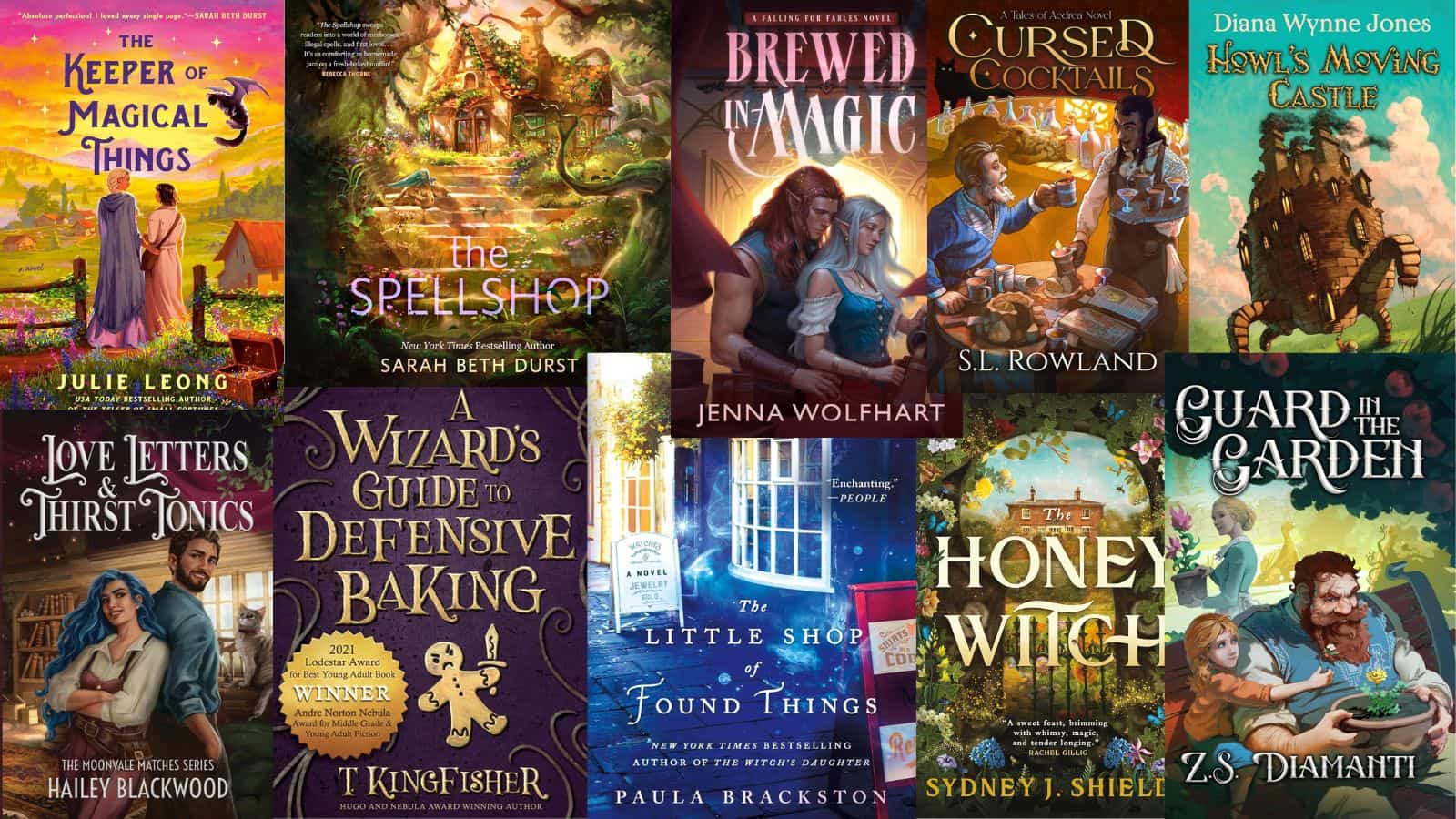
If cozy fantasy helped me, it's likely helping many others too. The genre has grown significantly over the past few years, especially post-2020. While publishers don't always break out "cozy fantasy" as a formal category, we can see its rise through the breakout success of titles like Legends & Lattes by Travis Baldree, the explosion of "cozy" and "low stakes fantasy" tags on platforms like Goodreads and TikTok, the rapid growth of the #cozyfantasy hashtag on BookTok, and increased demand for physical special editions of warm, character-driven fantasy.
More broadly, fantasy has been one of the fastest-growing fiction segments in recent years, particularly in trade paperback and special editions. Post-pandemic reading trends show strong demand for comfort-oriented genres, including romance, cozy mystery, and increasingly, cozy fantasy.
Cozy fantasy readers often overlap with romance readers, cottagecore enthusiasts, and readers who prefer physical books with beautiful covers. That last point matters. Cozy fantasy isn't just about story. It's about experience. The tactile joy of holding a warm, beautifully designed book aligns perfectly with the emotional tone of the genre.
Why I Created The Cozy Lantern Archive
After that first experience, I didn't just want more cozy fantasy for myself. I wanted to understand it. To catalog it. To build something around it. To create a place where someone else, maybe sitting in their own dark moment, could stumble into a story that helps them breathe again.
The Cozy Lantern Archive is my way of sharing the therapy I accidentally discovered.
It's a growing database of cozy fantasy novels, thoughtfully tagged and curated. It's a space that honors physical books and the beauty of reading. It's a place to find stories that feel like warm light in a dark room.
Because sometimes healing doesn't come from grand solutions. Sometimes it comes from a witch in a seaside cottage.
Interested in exploring cozy fantasy? Browse our growing archive of cozy fantasy books and filter by mood or theme, From Witchy to Cottagecore to Tea & Magic, there's a corner for every kind of reader.